Celebrating 30 Years- Thank You, Marty Schayowitz

It is a pleasure to write this thank you note to a man who I have known since the late 1980s, a man who has been involved with my dental practice since we first met, and a man who has grown to be my friend – Marty Schayowitz.

Marty was building his new dental supply company around 1987 or 88. I met him at a meeting of a dental study club to which I belonged where he was a guest ostensibly introducing his new company.  I distinctly remember cringing at the way Marty was treated by the dentist running the meeting, so I approached Marty once the meeting had ended and offered my apologies for this bad behavior.  I asked him if he would like to call on me to see if we might work together and I have been with Marty ever since.

Marty is not one to be complacent. After a few years, he sold his business to another bigger supply company but liking Marty so much, we stayed with him. Since then, he has moved on twice more and we are still with him and would not think of working with anyone else.

What makes Marty so successful? He is one of those special people who truly cares about those he calls on. If we ever had an issue, Marty would address it and find a solution pronto. If we needed additional information or recommendations regarding dental materials, disposable supplies, or the myriad of other items which a dental office uses, Marty would either know the answer or find the right person who could answer the question for us. He’s just one of those people who always seems to give more than he receives.

Marty Schayowitz and Richard Nadler

Over and above his caring for us professionally, I believe that Marty actually considers his clients as extended family. Every year, on at least one occasion, Marty arranges “appreciation dinners” or fishing trips or meetings at beautiful restaurants for his fortunate clients.   As a matter of fact, I am attending one such dinner this evening at a restaurant in Morristown where we will learn about new dental restorative materials. Thanks to Marty, my wife Liz and I have enjoyed many interesting and unusual outings with a great group of dentists.

In addition to these professional events, Liz and I had the pleasure of attending Marty’s wedding to his wife Arlyn.  A few years later, we and several other clients of Marty’s were guests at a dinner honoring Arlyn for her public service. Marty has always made us feel like friends rather than just clients and both Liz and I feel a special bond of friendship with him.

In conclusion, Thank You Marty Schayowitz for years and years of caring for our dental practice, helping us when help was needed, and for just being our friend.

Sincerely yours,

Richard and Liz Nadler

30 Days of Thanks- Post Graduate Teaching Institutes

Perhaps it will not be so surprising to hear that when a person graduates from dental school, he or she still has much to learn. To that end, there are a variety of post graduate teaching institutes available to engage those dentists who choose to carry on the learning process. There are schools or curricula for learning implants, dentures, crowns and bridges, cosmetics, TMJ and a variety of specialties and sub-specialties. It is up to each individual dentist to decide which path he or she chooses to pursue.

After graduating from dental school, and having served an “apprenticeship” in offices other than my own, I knew that basic drill and fill dentistry was not for me. I found that the study of occlusion – how the teeth, jaws and muscles work as a system – was fascinating for me and provided the basis for practicing dentistry with excellence. What we were taught about occlusion in dental school was adequate for a basic understanding only. So, I decided to begin studying this subject and have been studying it ever since.

I will be writing thank you letters to the important mentors in my life later this month, but I must mention Dr. Peter Dawson who is considered by many to be the father of modern occlusion–he actually wrote the book on it. In the late 1980s, I traveled to Richmond, Virginia to take a course from Dr. Dawson. As luck would have it, I ran into him at a restaurant in the airport as I was traveling home after his course. We had a very interesting conversation, and he suggested that I attend the L. D. Pankey Institute in Florida if I was serious about learning and understanding occlusion. I came to learn that this Institute was the premier of its kind and was attended by dentists from all over the world. So I did enroll as Dr. Dawson recommended.

post graduate teaching institutesI traveled to Key Biscayne, Florida on several occasions for the multi-day courses which were offered at this beautiful institute. I pursued the study of occlusion there over a four-year period and learned much, much more than simply occlusion. We learned about the practice of dentistry as well as a philosophy encompassing the balance between work, play, love, and spirit. The L.D. Pankey Institute changed my life, and allowed me to provide a level of dentistry of which I could be quite proud.

Las Vegas Institute_LargeMany years later, as Y2K approached, I became fascinated with providing more and finer cosmetic dentistry for my patients. At that time, the economy was in major growth; and patients had the desire as well as the means to improve their appearance. I had heard about a place called the Las Vegas Institute where outstanding cosmetic dentistry was being taught. The name of the Institute caused a bit of apprehension on my part, because I assumed that dentists went there simply because of its location, but I proceeded to take a course there. I actually brought a patient and performed her dentistry in their clinic after the associated classroom lectures. The patient who came with me was my wife, Elizabeth, and both she and I were ecstatic with the result.

As it turned out, students from all over the world also attended this teaching institution, and like my experience in Florida, they taught a philosophy of dentistry with which I became intrigued. It is here where I learned a different point of view about occlusion, and it is here where I developed my ability to better help those with Temporomandibular Joint Dysfunction and head or facial pain. I traveled there on many occasions over a period of more than 10 years and completed their entire curriculum of courses. During that time, the quality of my dentistry constantly improved and I loved the entire process.

I feel blessed to have found each of these two institutions which helped to shape me into the dentist that I am today. It is the dedicated teachers and researchers at these facilities who provided such amazing information about technique and materials as well as the philosophical basis for providing excellence in dentistry and life in general.

The next time that you are in the office, you will see two walls which are covered with certificates from those institutes. I am proud to have attended these two prestigious schools and THANK them for shaping my career into one of which I am proud.

To learn more about Dr. Peter Dawson, please click on this link: http://dental.thedawsonacademy.com/author/dr-peter-dawson 

To learn more about The Pankey Institute, please click on this link: http://www.pankey.org/the-pankey-experience/the-institute/photo-tour/

To learn more about The Las Vegas Institute, please click on this link: http://www.leadingdentists.com/about-lvi/

Celebrating 30 Years With 30 Days of Thanks Kicks Off

30 Days of Thanks Kicks OffThis year, we commemorate the 30th anniversary of the opening of our dental practice in Hillsborough. To accomplish this, we have designated the month of November as Celebrating 30 years With 30 Days of Thanks. To that end, we have created a list of 30 different ways to express our gratitude to the many people and business partners who have contributed to the evolution and success of our dental practice. It is all these people who provided the support, fun, excitement, challenge and fulfillment which have made this last 30 years such an amazing adventure.

Each day this month, we will find a different way to express our thanks. Among those who will be honored are my mentors, significant teaching institutions, wonderful doctors and dentists to whom we refer, those who refer patients to us, our partner dental labs, our IT partners, our wonderful team, friends, family and last, but certainly not least, our amazing patients.

We will express our thanks in a number of different ways. Many will receive public letters of appreciation, which will be posted on our blog and social media pages. You may find many of these letters to be interesting as we plan to share stories about the practice and the people involved with it. There will be at least three of these each week during the month. In addition, there will be giveaways each week for our patients and we have ordered special commemorative gifts for that purpose.

Before our dental assistant, April, begins her maternity leave at the end of this month, we will enjoy a luncheon to honor of our fabulous team. Finally, we are working to complete our gift of appreciation to the town and people of Hillsborough. Details will be announced at the end of the month.

To kick off these 30 Days of Thanks, the entire list of people and entities to be thanked was reviewed in order to decide who should come first. Without hesitation, it is our wonderful patients who deserve to be celebrated first. Without these people, we would not be able to do the work that we love. Over the years, we have shared each other’s happy times, sad times, difficulties and joys. Many, if not most, of the patients who began coming to our office in the 1980’s were around the same age as me. So our families have grown up at the same time and we have shared similar experiences.

I will never forget that my team and I hosted a “VIP” (Very Important Patient) party way back in the late 80’s and it was held at my home. Our family of patients was still intimate enough to invite every one of them to this event. It was a summer party and was attended by many families who had children about the same age as my own. I still fondly remember the wonderful afternoon that was enjoyed by our team and patients alike. Many of those patients remain in our practice to this day.

Not too many years later, I turned 40 and a surprise 40th birthday party was thrown for me again at my home. Our entire dental team at that time attended that party and provided some of the “entertainment.” Specifically, an exotic dancer presented herself at my front door and proceeded to engage in a most provocative dance with yours truly – I believe her name was ”Katja”. Talk about embarrassing… That same night, my dental assistant – not Liz – came out of her shell and made quite a hit with some of the guys in attendance culminating in one of them sipping champagne out of her shoe. What a crazy, fun night.

30 Days of Thanks Kicks Off

But enough reminiscing; how shall we thank our patients? Every person who has been a regular patient for at least five years will receive a gift certificate. That certificate increases in value with every five-year period that they have been our patient. Look for yours to arrive by mail. We are still checking, but I believe that there is one person who has been a continuous patient for the last 30 years! Naturally he will receive a special certificate!

In addition, any patient who is seen on a Friday this month will receive a commemorative gift. Also, every Monday, one random patient will receive a special gift. We’ll try to keep you posted on who wins what.  These will most likely be featured on our Facebook Page.

Most importantly, Thank You to all of our patients, both current and past. We are extremely grateful for the pleasure of having cared for you for the past 30 years. You provided us with friendship, laughter, challenges, happiness and fulfillment, which has made our lives meaningful. We Love you all!

Celebrating 30 Years With 30 Days of Thanks

This year, during the month of November, we will be celebrating the 30th anniversary of the creation of our dental practice in Hillsborough.  In November of 1984, we opened a single operatory office on route 206 in a space currently occupied by a hair salon. I say “we” because the practice was originally a partnership between me and a fellow graduate from my dental school class.  The plan was for each of us to work in the practice three days each week until our practice grew to the point where we would both work in the office full-time. Our official first day was mine alone and there were two patients scheduled that day. There was no receptionist, dental assistant or hygienist. There was just me, and I clearly remember waking that day with a nervous feeling in the pit of my stomach, probably not dissimilar from stepping out of a plane on your first skydive. Needless to say, the day ended extremely well owing mainly to the wonderful first two patients, one of who is still in our practice today!

30 Years of Thanks

While I was busy working on setting up this practice, I had a job with a dental clinic in Wayne, New Jersey where there was an amazing assistant whose name was Liz. I really enjoyed working with this particular dental assistant and asked if she had any interest in working in my new dental practice. Her response was an enthusiastic “yes” and she began working with me in early 1985 as our first and only team member.

As you may have figured out, the partnership with my classmate lasted only about a year at which time I decided to continue on alone. Over the next couple of years, our team grew with the addition of another dental assistant freeing Liz to become the receptionist.  Next, we hired a part-time dental hygienist and we were all set with a solid team and growing!  Those first several years were the happiest of my life. I absolutely loved working on my practice – watching it grow and prosper – and always enjoyed the patients who provided our team with such a sense of fulfillment and friendship.   Many of them remain our close friends today. 

We outgrew that first office in a couple more years and moved to our second office on Amwell Road, not far from where we are today. In that second office, we grew from two operatories to three and remained there for over 10 years. Then, in the early 2000’s, we moved to our current location where we built an office which works beautifully for us.  It expresses who we are and our patients find it to be both attractive and comfortable.


30 Years of ThanksEverything good that happened with regard to the success and growth of our dental practice has been due to  many, many people to whom we wish to express our gratitude during the month of November. In planning for this “30 Days of 
Thanks”, I had the opportunity to think back on all the wonderful times which were shared with my evolving team, patients, vendors, and mentors. I plan to share many stories with you during the month of November by writing public thank you notes to many of those wonderful people. I hope that you enjoy these stories and stay tuned for your turn to be thanked during next month.  Please watch our Facebook page – https://www.facebook.com/nadlersmiledentist – and our newsletters for information about the various prizes and giveaways which will also occur during our 30th Celebration Month. 

The last 30 years have been an adventure, a joy, a challenge, and a passion.  I look forward to this opportunity to formally thank so many of you who have become our friends over the past 30 years. All the best to you during this Thanksgiving month and throughout the Holidays!

These Are a Few Of Our Favorite Things

In this article, we would like to share with you seven of our favorite products and technologies. These are all items or services which we as a team use on a regular basis and recommend to our patients. We feel that each of these is the leader in its field and offers solid benefits. So, without further ado, here is the list:

Number 1: Sonicare Toothbrush

Favorite ThingsThrough the years, we have recommended a variety of toothbrushes ranging from the Rotadent to Oral-B and finally to Sonicare. In our estimation, the Sonicare electric toothbrush is simply the most effective tooth cleaning product on the market. End of story. Having used and Oral-B electric tooth brush for many years and having avoided the Sonicare because I found it to be uncomfortable initially, I began using it regularly and discovered that it was far superior at removing stains and plaque and maintaining gum health. What more is there to say?

Number 2: Closys Toothpaste

Favorite ThingsWe have been recommending Closys toothpaste for the last 10 years or so. It contains chlorine dioxide which kills germs. It does not contain abrasives, extra chemicals or other unnecessary ingredients which would make it a lesser choice for effective oral health. Closys II toothpaste effectively kills germs, helps maintain gingival and dental health as well as providing clean fresh breath.

Number 3: Inter Dental Cleaners

Favorite ThingsThere are a variety of ways to clean between the teeth which we recommend for different patients and for different reasons. I will lump these together as being the third most important thing we love. For those with regular spaces between our teeth, we love Reach Total Care floss by Johnson and Johnson. This is great floss which is effective, tastes good, and is well-designed.

Favorite Things

If you have bridges and are unable to use regular dental floss, then Superfloss by OralB is the choice for you. This product allows you to easily thread the floss underneath your bridges and thoroughly clean them with a minimum of fuss.


Favorite ThingsFor those who have very wide spaces between their teeth, pipe cleaners are an excellent choice to quickly and effectively clean between your teeth. For those with moderate spaces between their teeth and for those who have had gum surgery ProxaBrushes are the weapon of choice. They are easy to hold and manipulate and are effective at cleaning larger spaces between your teeth. Finally for those people who hate to floss, there is a product by Sonicare called the AirFloss are which is very effective especially at removing debris which gets caught between your teeth.

Number 4: NeoStrata Skincare

Favorite ThingsWe have offered the line of NeoStrata skin care / antiaging products in our office for the past few years. Though it has not been very popular amongst our patients, it is very popular with our dental team. This line of products is meant to care for your skin and these products do what they say they will do. If you have any interest, feel free to ask us for samples and I think that you will be surprised at how effective they are. For your information, this little-known company provides products to various larger corporations whose names you may well know.

 Number 5: Zoom! Teeth Whitening

Favorite ThingsFor many years, we used the BriteSmile system for teeth whitening.  Zoom! Whitening became the standard for tooth bleaching when the show Extreme Makeover was so popular. Some years ago Zoom! Purchased BriteSmile and their newest system offers improvements which make the procedure both more effective and comfortable. For those people who desire whiter teeth, the in-office Zoom!bleaching system is the best.

Number 6: Invisalign

Favorite ThingsInvisalign orthodontics has been available for more than a dozen years. This company continually up grades their techniques and products to offer an excellent alternative to metal braces. There are various bite problems which can now be addressed using Invisalign, and more and more adults are taking advantage of this excellent service to help turn back the clock. FYI, the Invisalign system aligns and levels the teeth using a series of clear aligners which are changed by the patient every two weeks. The results we have achieved with this system have been very impressive.

Number 7: The K7 and TMD Orthotics

Favorite ThingsWe purchased the K7 technology many years ago to assist us in treating patients with head, neck and facial pain. This system has proven to be a wonderful way to help diagnose our patients’ problems and to determine the best way to treat them. Using this system, we are able to have orthotics custom fabricated for patients to wear over their lower teeth. These orthotics have been very effective at eliminating various symptoms of TMD pain and associated symptoms. If you suffer from chronic pain, I recommend that you ask us about how the K7 system and an orthotic may be a blessing for you.  Check out this technology at www.myotronics.com.

It is our hope that you find these seven of our favorite things to be useful for you. If you have any questions about any of these items, please do not hesitate to ask. You may contact us by phone at 908.359.6655 or via our website at www.DesignsForDentalHealth.com.


Smile Enhancements for Healthy Aging

Earlier this month, we discussed common dental problems which affect us as we grow older and how to address them.  In this installment, we will describe three popular methods to improve both the appearance and the function of your teeth. At the end of this article, we will reinforce what we believe to be the best ways to improve the health and beauty of your smile.

smile enhancementsYou may be surprised to hear about the first popular procedure which has increased in frequency over the past several years.  Once considered only appropriate for adolescents and teenagers, orthodontics has become an excellent means for adults (even those well into their 60s) to improve their smile, take years off their facial appearance, and improve their self-esteem.  This, in turn, improves their overall outlook on life. Alternatives to the metal braces commonly seen in the past have grown in popularity as they have become more comfortable, effective and invisible.  In our office, Invisalign™ orthodontics has proven to be a discrete and successful method for adults to address bite issues and crooked teeth.  Even patients who had braces as a teenager find the system an excellent way to realign teeth which have relapsed over the years.

invisalign, smile enhancements

Invisalign™orthodontic treatment, combined with either tooth bleaching and/or bonding, can help you to achieve your dream smile, improve your appearance, help you look younger, and feel a renewed sense of self confidence.  In addition, a properly aligned bite serves to preserve your overall health and well-being.  Teeth which are not aligned and bites which are not properly balanced are much more at risk for a variety of dental issues.  These issues include tooth fractures, tooth wear, loosening teeth, gum recession, ineffective chewing ability as well as a variety of jaw, neck, and shoulder pain and headaches.

The second popular dental enhancement which has steadily gained in popularity over the last twenty-five plus years is implants. Titanium implants have evolved and become a staple in the replacement of missing teeth for those who wish for comfort, convenience, and excellent appearance. Implants can be used in a number of different ways to replace missing teeth. The simplest way, of course, is for replacing a single missing tooth. But implants can also be used to replace a series of missing teeth or even an entire arch of missing teeth. Contrary to popular opinion, the placement of implants does not involve significant discomfort and their success rate is very high.

implant, smile enhancements

There are many patients who have struggled with dentures for years. Such patients have had as few as two implants placed to stabilize their existing dentures. The benefits of such procedures are astounding for those who have struggled to eat and speak with loose plates for years. We even see patients who are about to lose all their remaining teeth in one or both arches. Such patients can have their hopeless teeth removed, four implants placed, and a set of teeth mounted on those implants all in a single appointment. That procedure is called “All-On-Four” and requires collaboration between a prosthetic dentist, an implant surgeon and a laboratory technician.  The results in these cases are life changing.

The third popular smile enhancement involves bonding or porcelain to restore worn, broken, or otherwise damaged teeth. “Bonding” utilizes tooth-colored filling material which is placed on one or a group of teeth to restore natural appearance, shape, and color. Similarly, porcelain is used in more advanced cases for those patients who wish to have the most long-lasting and cosmetic solution to their dental problems. Porcelain can be used to cover the entire tooth or limited areas of the tooth as needed in any given situation. The porcelain is bonded to the teeth which results in a very strong, cosmetic, and natural result.

Bonding and porcelain can be used to enhance smiles in a number of different ways. Teeth which have mild misalignment can be made to look perfectly aligned instantly using these materials. Similarly, problems with symmetry, proportion, color and shape can all be addressed using these materials. The next time that you are in our office, make sure to look at some of the photographs on our walls which exhibit the results gained by using these materials.

Finally, let us reiterate the best ways to ensure healthy aging at least as far as oral health is concerned.  As we grow older, we are all more prone to have decay which can sometimes develop very quickly.  It is not uncommon for adult patients to have some gum recession which results in the exposure of root surfaces.  Such surfaces are very prone to decay and must be carefully monitored both at home and in the dental office.  In addition, as our gums recede, food is more likely to lodge between the teeth creating another cause for decay developing.  Increased use of medications and other medical issues may lead to a condition of dry mouth.  Without the buffering effects of saliva, the likelihood for increased dental decay as well as gum disease is highly likely.

dental care, smile enhancements

So what is one to do to prevent an increase in gum disease and dental decay? Here are our favorite as well as most effective recommendations:

  1. Use an electric toothbrush and brush where the teeth and gums meet.
  2. Clean between your teeth with an appropriate sized tool. Large spaces require a proxy brush and smaller spaces require fluffy floss.
  3. Brush before bed!
  4. Rinse with a fluoride mouthwash especially before bed.  During this month we have been handing out Listerine Zero which is a good product found in the grocery store but any similar product which includes no alcohol can be used.
  5. Have regular checkups! This is the best way to make sure that small problems do not become big ones! In the past few years, we have seen more and more patients who have returned after extended periods with more severe problems. Regular checkups will save you money and give you more peace of mind.

In closing, cosmetic dentistry may be key to a person’s health in later life.  Here is a quote from a cosmetic dentist in Texas:

“We often hear older patients just wanting things patched up as opposed to getting something aesthetic. They may have the idea that they are not worth it, or their families have the idea that they are too old for cosmetic dentistry. This may lead to an attitude that things are ending.

“Improving an older person’s mouth can bring them more happiness and joy, not only by improving chewing efficiency, but also bringing joy back. They will want to smile more.”

If you have any questions concerning this article or any other dental questions, please call our office at 908.359.6655 or contact us via our website at www.designsfordentalhealth.com.


A Healthy Mouth and Healthy Aging

For over 20 years, September has been designated healthy aging month. This is an annual celebration of the positive side to growing older. During this month, a variety of sources provide Inspiration and ideas for baby boomers and adults aged 45 and above to help them to improve their physical, mental, social, as well as financial well-being.  It is our hope that we at Designs For Dental Health can provide some pertinent information to contribute to our fellow baby boomers.

healthy-aging-logo

It is interesting to note that there are over 76 million baby boomers today over the age of fifty and the first of the 82 million Generation X-ers are about to reach that milestone in 2015.  Why not use September as a time to look back on where you’ve been and consider what you might truly like to do with the rest of your life.  If you’re happy and fulfilled with what you’re currently doing, keep on keeping on!  If not, this is definitely the time to make a change.  From my point of view, I’m happy to keep on doing what we, as your dental care providers, love to do most.  Help to keep you healthy! dreamstime_l_21764121

So, with that in mind, here’s our question for you today: How’s your smile? 


First of all, research supports the idea that those who smile more are just plain happier.  Secondly, those with a healthy mouth are much less likely to develop a myriad of diseases commonly suffered by those of us in the 60+ population. So ask yourself- when is the last time that you had a comprehensive dental examination to determine your overall oral health and the best methods used to maintain it?  I promise to provide such a comprehensive examination free of charge for anyone over age 55 who has been a patient in our practice for more than 5 years and who requests it.  That’s right!  All you have to do is ask! I’ll sit down with you for as long as it takes to discuss your concerns and desires.  Then, we’ll do a comprehensive examination including an oral cancer screening, evaluation of your teeth, gums, and bite. Together, we’ll discuss any options that might be available to you to improve your dental health and from that discussion we will arrive at the best treatment plan for you.


Consider this – a mere 60 years ago, it was assumed that we would lose all of our natural teeth as we aged.  Now we know that a healthy mouth and teeth will help you to not only look good, but to eat delicious and nutritious foods, to speak clearly and to be confident.  An excellent quality of life demands a vibrantly healthy mouth.  Just consider the fact that those whose oral health is subpar are at risk for various serious medical conditions including: heart disease, stroke, diabetes, pneumonia, cancer, and various other diseases which are common in older adults.


What are some common oral health problems?


  1. Dry mouth.   Reduced salivary flow is most commonly the result of cancer treatments, the use of certain medications, and certain diseases. Dry mouth is a significant cause of decay and gum disease in older patients because saliva serves to buffer acids that are produced as we eat.  Without the protection of these buffers, rapidly advancing problems occur. 

  2. Darkened teeth.   Our teeth tend to darken with time as the pulp in our teeth recedes and the outer layer of enamel becomes thinner, thus allowing the darker dentin to show through. There are various methods available to whiten the teeth for a more youthful appearance.  These techniques do not harm teeth and most patients are extremely happy with their whiter, more beautiful smiles. 

  3. Root decay. As the gums recede, exposure of the tooth roots result. Exposed root surfaces are less resistant to decay than enamel and decay here is quite common. Good brushing and plaque removing habits go a long way to protect these surfaces. In addition, the judicious use of fluoride rinses can be most helpful to protect these exposed surfaces. 

  4. Gum disease. Inflammation of the gums and resulting bone loss in more advanced cases is quite common in adults over the age of 50.  Gum disease is worsened by poorly fitting tooth restorations, less than ideal dietary choices, and certain diseases like anemia, cancer, and diabetes.  The best way to fight gum disease is to practice excellent oral hygiene and have regular dental exams and cleanings as recommended in your particular case. 

  5. Tooth loss. Gum disease is the number one cause of tooth loss; however, teeth which have broken due to old, large silver fillings or simple attrition require prompt attention to avoid unnecessary loss of teeth!  Restoring a broken tooth is always better and less expensive than losing a tooth and later trying to replace it. 

  6. Uneven jawbone. This common problem is a result of premature tooth loss.  Once a tooth is lost, the bone previously around that root vanishes and teeth adjacent to and opposing the missing tooth will shift.  This causes an uneven bite and places for food and bacteria to become trapped. 

  7. Oral cancer. Routine examinations are essential to identify possible cancerous conditions in the mouth. Always report unusual lumps or bumps or discolorations to your dentist or hygienists promptly! 

So what is the best way to maintain your good oral health?  It’s the same regardless of your age!    

dental-health-seniors-120312-300x199  

  1. Brush at least twice a day with good quality toothpaste as recommended by your dentist or hygienist. The most important time to brush is just before bed!! 

  1. Floss or otherwise thoroughly clean between your teeth at least one time each day. 

  1. Visit your dentist or hygienist on a regular basis as recommended by them for regular cleanings and oral examinations.  

  1. Use appropriate rinses or fluorides or other such adjuncts as recommended by your dental professionals. 

healthy-aging

If you have any questions about healthy aging month or would like a complementary comprehensive examination please call us at 908.359.6655 or contact us via our website at www.DesignsForDentalHealth.com

Alzheimer’s Disease And The Oral-Systemic Connection

Infections in the mouth are now considered as potential risk factors for the progression of Alzheimer’s disease. Studies have shown that inflammation – like that which results from dental disease like periodontitis (gum disease) – has a role in the development of dementia and Alzheimer’s disease. Inflammation caused by specific bacteria in the mouth cause an inflammatory cascade throughout  the body which impacts our systemic health.

4-Nursing-Diagnosis-Nanda-for-Alzheimers-Disease

A dental infection can cause severe illness requiring hospitalization.  Such infections are more common than most people might think. Some months ago, one of our patients postponed an appointment during which a tooth infection was to have been treated.   This infection was found on an x-ray, and this patient had no pain or other obvious symptoms of a problem.  Several days after the original appointment we received a call from the patient that she had developed severe swelling over her eye.  This infection ultimately resulted in this patient’s being hospitalized for four days and requiring IV (intravenous) antibiotics.

Just to be clear, oral diseases which are more chronic in nature than the example above may not only be direct causes of systemic disease. They indirectly cause an increase in severity especially in those diseases which are known to be inflammatory in nature.  It is clear that eliminating oral inflammation reduces the inflammatory impact on many systemic inflammatory diseases including cardiovascular disease, diabetes, and rheumatoid arthritis. Although Alzheimer’s disease is generally not considered to be inflammatory disease, inflammation does have a role in accelerating the progression of this disease.

______________________________________________________________________

CBS News’ 60 Minutes produced a wonderful show about aging                                   which presents interesting information about Alzheimer’s Disease.

Here’s a link to view this show: 

www.CBSnews.com/news/living-to-90-and-beyond/

______________________________________________________________________

Research has identified five specific pathways by which gum disease and oral infections seem to influence the progression of Alzheimer’s disease:

1. Bacteria from the mouth can directly enter the bloodstream.

2. These bacteria cause systemic (whole body) inflammation impacting Alzheimer’s disease.

3. The bacteria P. gingivalis plays a role in the formation of blood clots and thereby cardio vascular disease and strokes which are both risk factors for Alzheimer’s disease.

4. Germs from the mouth can travel directly to the brain.

5. Some people have a genetic predisposition which can increase the effects of oral inflammation

alzheimers_awareness_kids_hoodie_medium

To summarize, the ways by which oral infections and periodontal disease affect disease progression is not always direct. However, the link between diseases of the mouth and body is established, and the evidence is clear that maintaining a healthy oral environment is crucial to minimize the progression of various systemic diseases including Alzheimer’s disease.

If you have any questions about the oral-systemic connection or diseases of the mouth, feel free to call us at 908.359.6655 or contact us via our website at www.DesignsForDentalHealth.com

Snoring, Sleep Apnea and Dentistry

Continuing our discussion concerning the health connection between the mouth and the body, we will review the condition known as Obstructive Sleep Apnea, its common symptoms and what can be done to minimize the potentially devastating effects of this disease.

Obstructive Sleep Apnea or OSA is a potentially serious sleep disorder in which patients repeatedly stop and restart breathing during sleep. The throat muscles intermittently relax during the sleep cycles, and the airway becomes  temporarily blocked.  The muscles normally support the soft palate and tongue. When these muscles relax, the airway either narrows or closes as a breath is taken, and the flow of air is blocked. As a result the blood level of oxygen is reduced, the nervous system thereby senses impaired breathing and awakens the patient so that an open airway is restored. These events can occur as many as forty or even more times each hour throughout the night. The end result is an inability to reach the normal, deep, restful and necessary phases of sleep.  This lack of quality sleep results in sleep deprivation.

sleep_apnea

People with sleep apnea usually snore (often loudly), may wake during the night with  gasping or choking, or may seem to stop breathing periodically according to their bed partners. OSA is most commonly seen in middle-aged and older adults and people who are overweight.  Men are more frequently affected, but women and children may also exhibit symptoms of Sleep Apnea.

Common signs and symptoms of obstructive sleep apnea include:

  • Snoring (often loudly)
  • Episodes of interrupted breathing during sleep
  • Abrupt  awakenings during the night
  • Daytime drowsiness
  • Dry mouth or sore throat in the morning
  • Morning headaches
  • Mood changes including depression or irritability insomnia

In addition, certain factors increase the likelihood of a patient’s having Obstructive Sleep Apnea.  Those with one or more of these signs are urged to speak with their primary care physician about the need to be tested for OSA. These factors include:

  • Being overweight
  • Having a neck size greater than 17 inches for men and 16 inches for women
  • Having high blood pressure especially if resistant to medications
  • Having a narrow airway possibly due to enlarged tonsils and/or adenoids
  • Chronic nasal congestion
  • Diabetes — type I or 2
  • Family history of sleep apnea
  • Smoking
  • Frequent use of alcohol


If a patient is unaware of their Sleep Apnea condition or if is left untreated, a variety of complications may develop.  Conditions associated with OSA include:

  • Cardiovascular problems including high blood pressure, coronary artery disease, heart attack, as well as heart failure and stroke and heart arrhythmias.
  • Daytime drowsiness, fatigue and irritability as well as difficulty concentrating.
  • Children with OSA may have problems in school and commonly have attention or behavior disorders.
  • Sleep deprived partners — commonly bed partners may choose to sleep in a separate room.


In addition to seeking the advice of your doctor, there are steps that you can take to at least minimize the effects of OSA.

  • Try to sleep on your side
  • Avoid drinking alcohol close to bedtime
  • If you are drowsy, avoid driving or using machinery
  • If you are overweight  lose weigh
  • Exercise regularly
  • Quit smoking
  • Use nasal decongestant

If you are diagnosed as having Obstructive Sleep Apnea, there are three traditional therapies which are used to control this condition.   The first is positive airway pressure in which a device called a CPAP is worn over the nose and/or mouth while you sleep.   It employs a steady stream of air to maintain an open airway.

Continuous Positive Air Pressure (CPAP)

Continuous Positive Air Pressure (CPAP)

The second is a dental appliance which is designed to hold the jaw in a downward and forward position.  In this position, the tongue and soft tissue at the back of the mouth are held  to effectively maintain an open airway. These devices are also used to minimize or eliminate snoring.

                                      Sleep Appliance
                                              Somnodent Sleep Appliance

Third, there are various surgical procedures which may be appropriate for some patients.

If you have any questions about obstructive sleep apnea or the oral appliances which are used to treat this disease, please call us at 908.359.6655 or via our website at www.DesignsForDentalHealth.com


Gum Disease, Inflammation, and Your Health

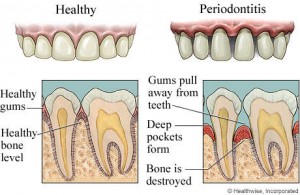
All of our body’s organ systems are interconnected. What happens in one system can and often does affect other systems. One prominent and currently emphasized interrelationship is the one between periodontal (gum) disease and cardiovascular disease. And in particular, it is inflammation which is the common link between these two conditions.

Inflammation by itself is not a bad thing. Acute inflammation is the body’s normal response to injury and infection. This type of inflammation is experienced as redness, pain and swelling. Immediately after an injury, there is a biochemical reaction which improves blood flow to the affected area. Nerve and other cells send out signals to recruit white blood cells which help fight foreign bodies. This acute inflammation is absolutely necessary for normal good health.

There is another kind of inflammation which is our main concern in this article. That is chronic inflammation which is also known as low–grade or systemic inflammation. This inflammation is long–lasting and examples include autoimmune disorders like rheumatoid arthritis and lupus. In these cases the body mistakenly initiates an inflammatory response even though there is no actual infection or injury to be fought. Other examples of chronic inflammation include inflammatory bowel diseases like ulcerative colitis and Crohn’s disease.

periodontal-disease (1)


Chronic “hidden” inflammation occurs throughout the body when something engages the immune system. This engagement varies from person to person but may include repeated or prolonged infection, smoking and gum disease. Obesity also makes one prone to inflammation as fat cells turn out inflammatory proteins called cytokines. Most people don’t know that they are inflamed. There is a test which measures the inflammatory marker called the C–reactive protein but it is not used routinely to determine increased risk of associated diseases. The important point is that inflammation is the primary cause for most of our serious chronic diseases including cardiovascular disease, diabetes, cerebrovascular disease, rheumatoid arthritis, and Alzheimer’s disease to name but a few.

As far as the connection between gum disease and cardiovascular disease, research indicates that heart disease, clogged arteries, stroke and bacterial endocarditis may all be linked to oral health. Researchers believe that gum–disease–producing bacteria enter the bloodstream and make their way to the heart. And just as these bacteria create chronic inflammation and damage of the gums and bone around the teeth, the same bacteria can cause a similar response in the blood vessels. Inflammation can begin and accelerate the build-up of plaques with in blood vessels – called atherosclerosis or hardening of the arteries. These plaques decrease the flow of blood to both the heart and the brain, and if such a plaque breaks free can result in a heart attack or stroke.

periodontal-disease

What can you do? Roughly 75% of adults have some form of gum disease and 30 % have moderate to advanced periodontitis. Those with more advanced gum disease are much more likely to develop associated inflammation-related heart disease or stroke or the other inflammation-related illnesses. Having a thorough periodontal examination and following up with necessary gum disease periodontal therapy is the best first step. Avoid the obvious creators of inflammation which have been proven to be unhealthy. Prime examples are smoking and heavy drinking of alcohol.

There are many who advocate an “anti-inflammatory” diet. Many of the recommended foods would be typical of Mediterranean cuisine and certainly represent good nutrition. Such a diet would include:

• Generous amounts of fruits and vegetables

• Using healthy fats like olive oil

• Eating small portions of nuts

• Drinking red wine in moderation

• Eating fish regularly

• Limiting or eliminating red meat

If you would like more information about inflammation, gum disease and your health, please feel free to contact us by telephone at 908.359.6655 or via our website at www.DesignsForDentalHealth.com